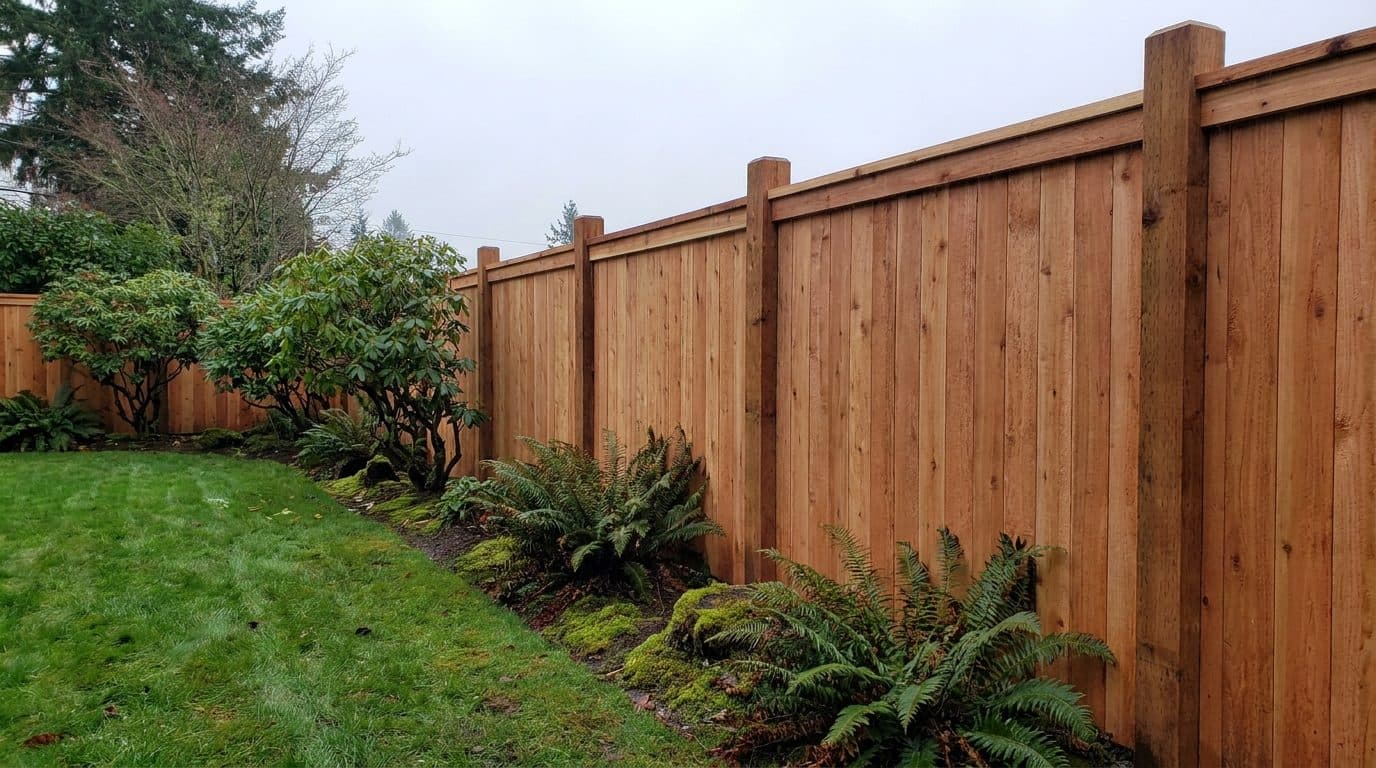
Fence Installation in Oregon City, OR
- Posts set deep, drained and plumb
- Gates hung so they never sag
- Straight lines, level tops
Get a Free Quote
What Our Customers Say
Where Does the Low Front Section End on Your Oregon City Lot?
A new fence laid out around the city's two height zones — low in front of the house, full privacy behind it — with historic and overlay lots checked before a post goes in.
Every fence installation in Oregon City starts with one measurement. The city splits a residential lot into two zones: in front of the house the limit is 42 inches, and from the front facade back it is 6 feet. The line between them sits at the front wall of the house or 40 feet back from the front property line, whichever is closer to the street. On a deep lot with the house set far back, that 40-foot mark can land well forward of the porch, so we measure it on site instead of guessing from the plat.
The second check is your address. A lot inside a historic district, a historically designated house, or a yard in the Natural Resource Overlay District needs a city review before the fence goes up. The same is true for anything in a public utility easement or the right-of-way, which needs Public Works approval. Most single-family yards need none of that, but this town has more of these lots than its neighbors, so we confirm yours before quoting.
Once the layout is settled, the build itself follows the ground. Older blocks near the river tend to be flat and narrow, while the newer streets up the hill often slope from front to back, which means stepped panels and deeper posts on the low side.
How the Job Runs, Step by Step
Find the 42-inch line
Front facade or 40 ft back, whichever is closer
Check the lot's status
Historic, overlay, easement or right-of-way
Written estimate
Heights, gates and layout set down before work
Locate and set posts
Utilities marked; posts drained and plumbed
Build and walk the line
Panels hung, gates checked, yard cleaned
Oregon City holds 1,552 homes built before 1940 and 7,891 built since 1990, so the same crew may set a 42-inch picket run on an old block in the morning and a 6-foot privacy fence on a sloped new street after lunch.
Reasons Homeowners Book a Fence Installation
More Fence Help in Oregon City
What Affects the Cost of Fence Installation Here
A lot with two height zones and a possible review has more moving parts than a plain backyard run.
Two heights on one run
Changing from 42 inches to 6 feet takes a transition post and a stepped or tapered section.
Historic or overlay review
Lots that need a review add design time and a wait before building.
Slope
Hillside streets need stepped panels and longer posts on the downhill side.
Material and style
Pickets, cedar privacy and ornamental metal all differ in labor and lumber.
Gates
Each walk or drive gate adds heavier posts and hardware.
Removal
Taking out an old fence and its footings adds time.
You get a free written estimate for the fence installation before any digging starts.
Why Homeowners Here Choose Us for a New Fence
The 40-foot rule measured on site
Not guessed from a map
Review status checked first
Historic, overlay and easement lots flagged before we quote
5-year workmanship warranty
On every fence we build
Fence Installation Questions
My house sits far back from the street. Where can the 6-foot part start?
Can a new fence have a tall back and a low front?
How do I know if my lot is in a historic district or overlay?
Can you build along the back of the lot where the utility easement is?
Plan Your Fence Installation in Oregon City
Written estimate before any work begins.